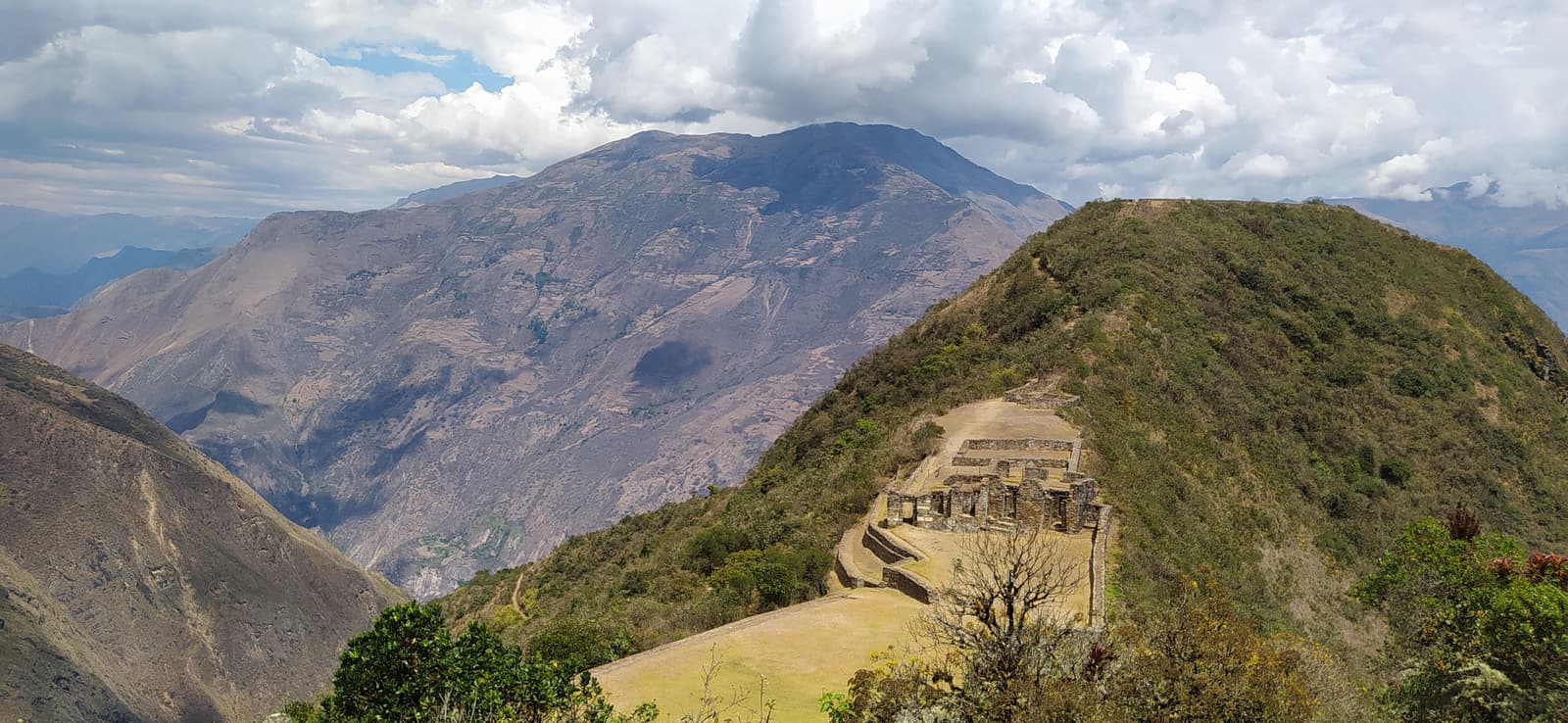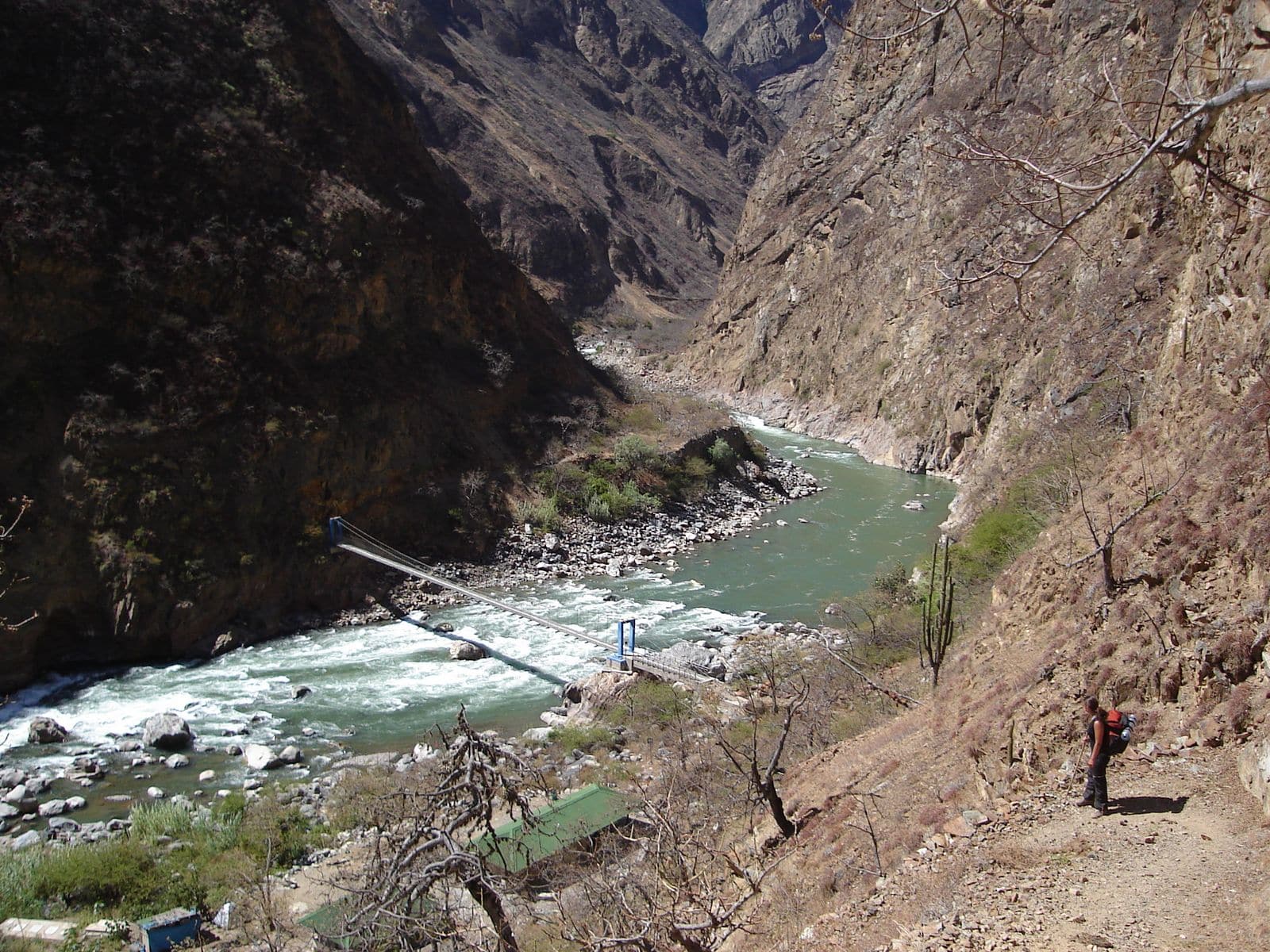
Choquequirao has two seasons, like the rest of the southern Peruvian Andes: a dry season from about May to September and a rainy season from about November to March, with April and October as shoulder months. On this trek you also cross two climates in a day — a hot, dry canyon floor at around 1,550 m and a cool, often misty ridge at 3,000 m.
Choquequirao month by month
Conditions below are typical patterns, not forecasts; they vary from year to year.
| Month | Season | Trail conditions | Verdict |
|---|---|---|---|
| January | Rainy | Wet, muddy, landslide risk | Only if experienced |
| February | Rainy | Usually the wettest month; slippery descents | Avoid |
| March | Rainy | Still wet; very green | Possible, with care |
| April | Shoulder | Drying out, lush, few people | Good |
| May | Dry | Dry trail, clear skies, green canyon | Excellent |
| June | Dry | Clear days, cold nights | Excellent |
| July | Dry | Clearest skies, busiest month | Excellent |
| August | Dry | Clear; dust and haze possible | Very good |
| September | Dry | Warm canyon, first showers late in the month | Very good |
| October | Shoulder | Hotter, showers building | Good |
| November | Rainy | Afternoon rain more frequent | Fair |
| December | Rainy | Regular rain, muddy | Fair to poor |
Dry season: May to September — the best time
Clear mornings, dry paths and reliable views of the snow peaks of the Vilcabamba range. Days are warm to hot in the canyon and nights at the ruins can drop close to freezing, so bring a proper sleeping bag. July and August are the busiest months — which at Choquequirao still means very few people. May, with the canyon still green after the rains, is our favourite.
Shoulder months: April and October
April is lush, quiet and usually drying out; October is hotter in the canyon with showers building. Both are good choices if you are flexible and carry rain gear.
Rainy season: November to March
Rain usually arrives in the afternoon, turning the steep paths slippery and occasionally bringing landslides on the canyon walls. Treks do still run, but views are often clouded. February is normally the wettest month; the Inca Trail closes for maintenance then, while Choquequirao stays open.
Crowds
Crowds are never the problem here. Peruvian holidays — Easter week, the late-July national holidays and Inti Raymi in Cusco on 24 June — bring more domestic travellers, and Cusco hotels fill up, so book accommodation ahead then.
What to pack by season
- Dry season: sun protection, plenty of water capacity, insect repellent, a warm sleeping bag for cold nights.
- Rainy season: waterproof jacket and trousers, pack liners, trekking poles for slippery descents, and spare time in your plan.
- Always: layers — you may go from 30 °C at the river to near freezing at camp in the same day.