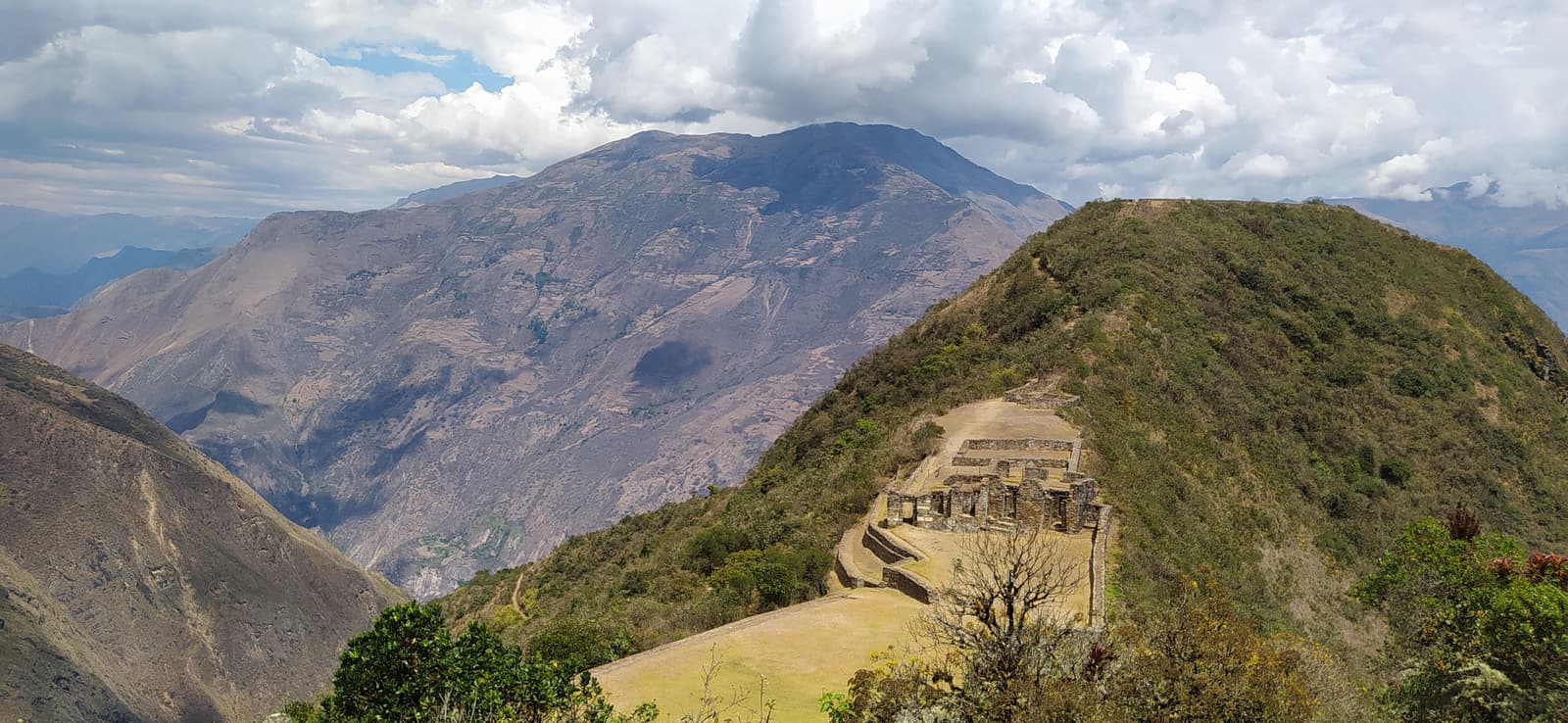
Choquequirao sits on a spur of the Salkantay massif, on the border of the Cusco and Apurímac regions, some 1,500 m above the Apurímac river. It is one of the largest Inca sites in Peru, and one of the least visited — a few thousand people a year, against Machu Picchu’s thousands a day. This guide covers the essentials.
A short history
Choquequirao was built in the second half of the 15th century, most probably under the Inca Pachacútec or his son Túpac Inca Yupanqui, as a royal estate, religious centre and control point between the Andes and the Amazonian lowlands. After the Spanish conquest it lay within the territory of the Neo-Inca state of Vilcabamba, the last Inca resistance, which held out until 1572. The first written descriptions date from the 18th century; Hiram Bingham visited in 1909, two years before he reached Machu Picchu. Systematic clearance and restoration began only in the 1970s and gathered pace from the 1990s, and much of the site is still under forest.
How long do you need?
- Four days — the classic out-and-back from Capuliyoc, with about a morning at the ruins.
- Five days — the version we recommend, with a full day to see the llama terraces and the outlying sectors.
- Eight or nine days — the Choquequirao–Machu Picchu trek, one of the great walks of South America.
- Plus two days in Cusco beforehand, whichever you choose, to acclimatise.
Getting there
About four hours by road from Cusco to Cachora and the Capuliyoc trailhead, then two days on foot. Our getting here guide covers buses, colectivos and private transfers, and the trek guide covers the walk day by day.
What to see
 Choquequirao archaeological park
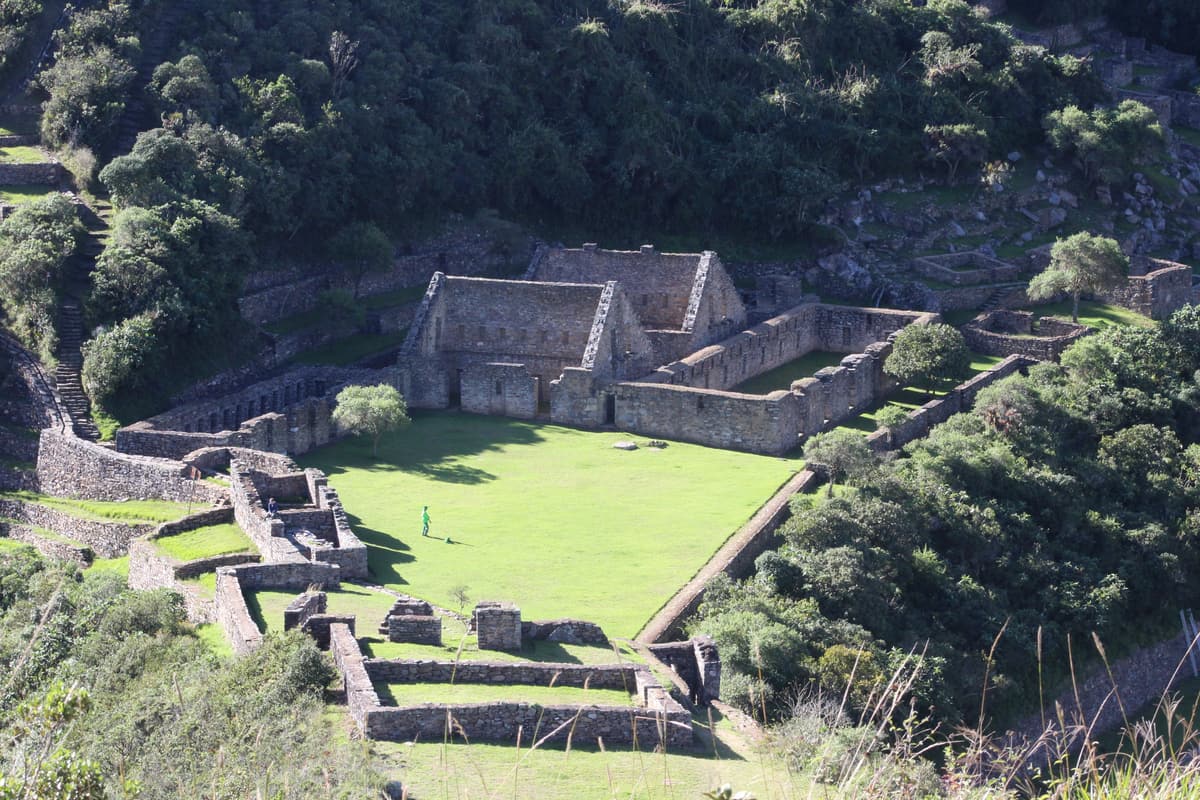
 Choquequirao
The Inca “cradle of gold”
A late-Inca royal estate and ceremonial centre spread along a ridge at about 3,050 m, 1,500 m above the Apurímac river. Plazas, fountains, a flattened ceremonial summit and terraces spilling down the mountain — and only a handful of visitors a day.
 Choquequirao archaeological park
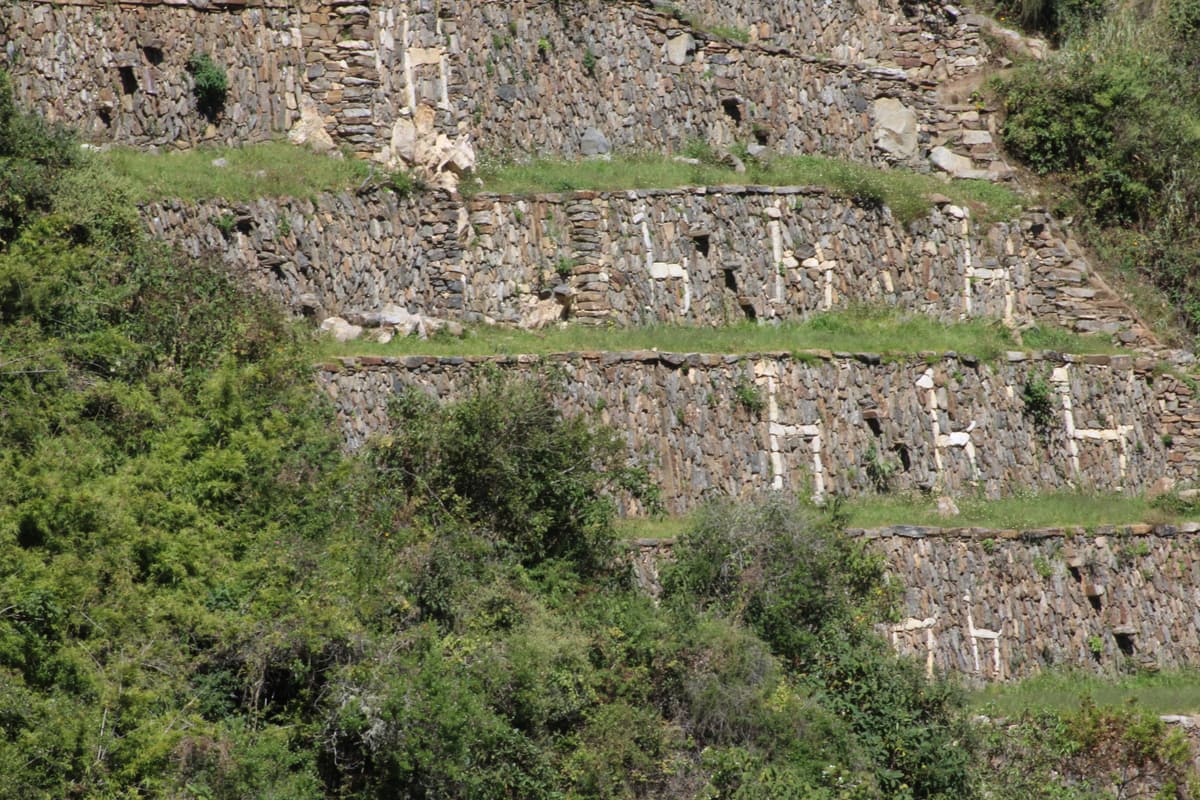
 The Llama Terraces
Inca art in white stone
On Choquequirao’s western flank, a flight of steep terraces is decorated with more than twenty llamas picked out in white stone against the dark walls — a mosaic unique in the Inca world, uncovered in the early 2000s.
 The trail & the Apurímac
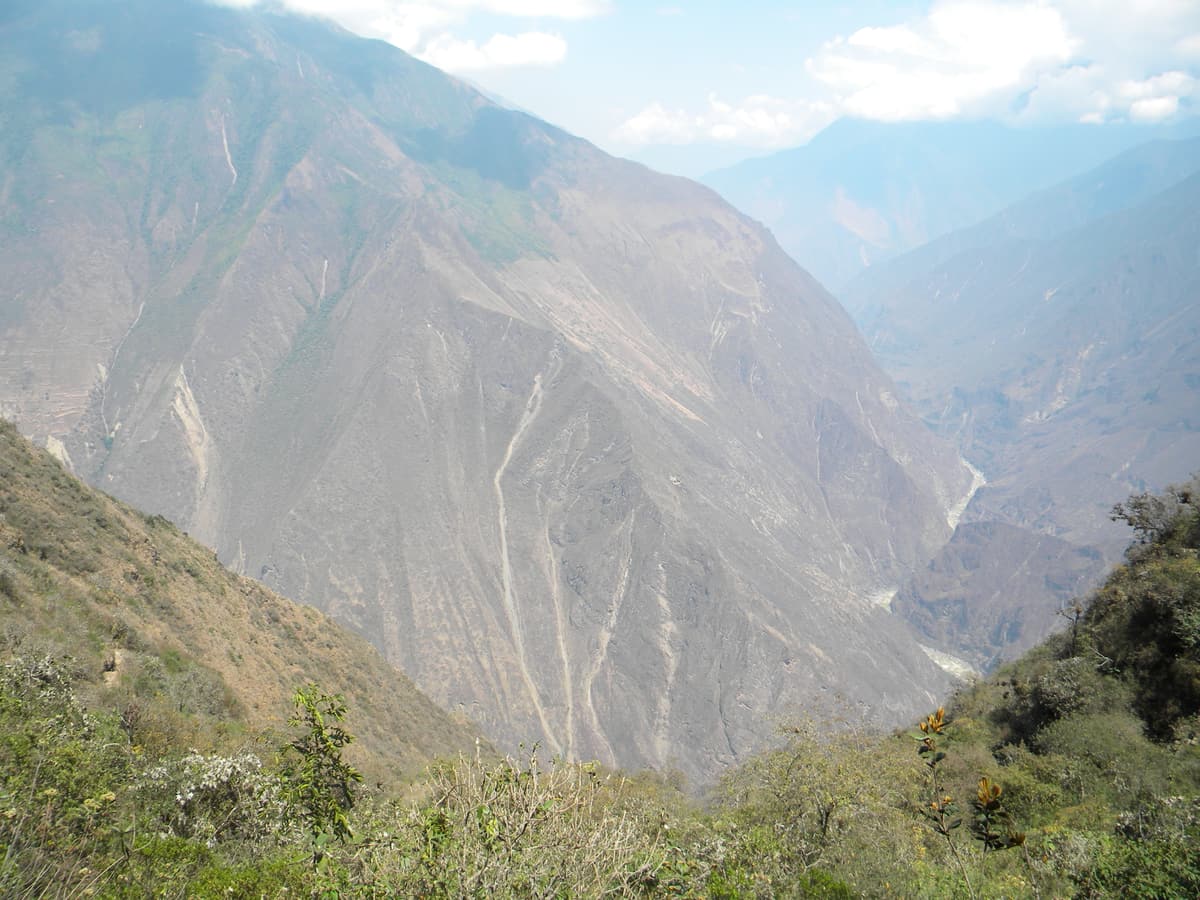
 Apurímac Canyon
The “great speaker” river
The trek to Choquequirao crosses one of the deepest canyons in the Americas. From the rim at Capuliyoc the trail drops some 1,400 m to the thundering Apurímac at Playa Rosalina, then climbs the far wall to the ruins.
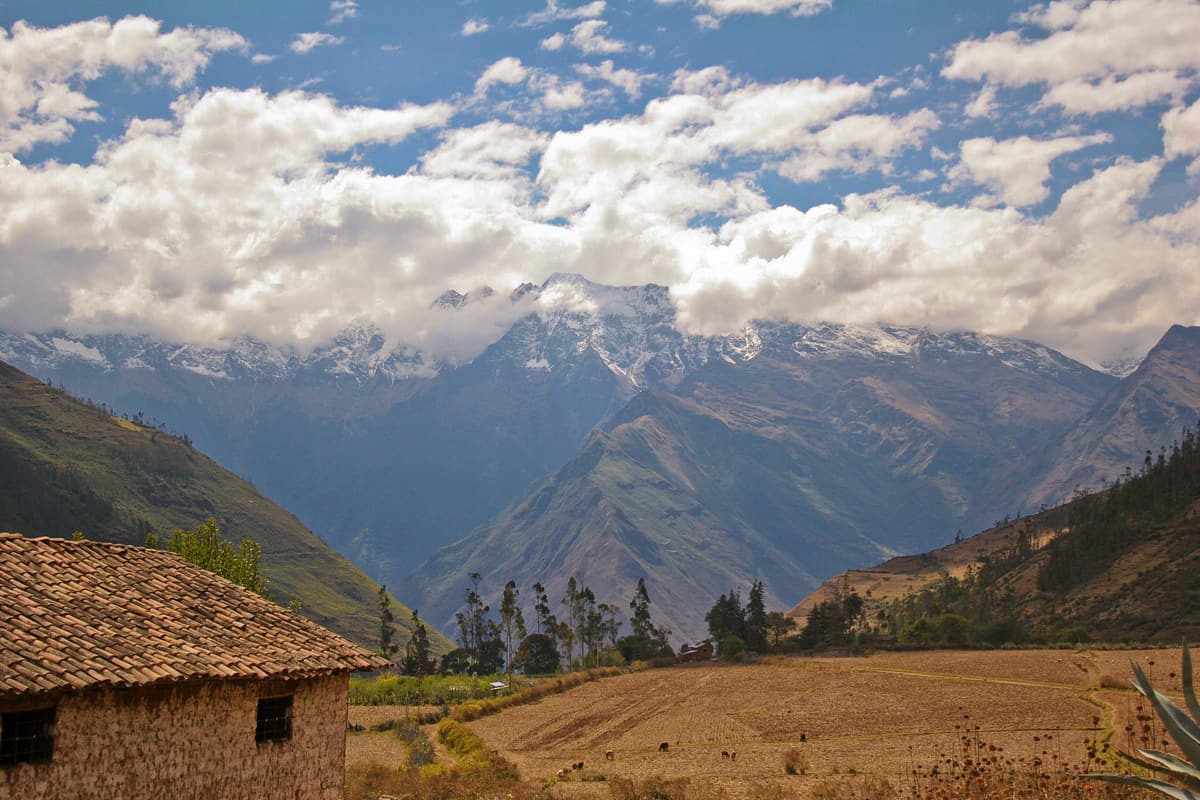 The trail & the Apurímac
 Cachora & Capuliyoc
The trailhead village
A quiet farming village at about 2,900 m facing the snowy Padreyoc peak, where mules are loaded and arrieros hired. Ten kilometres on, the Capuliyoc viewpoint marks the start of the trail and the first gasp-inducing view into the canyon.
See all of them, with directions and tours, in our things to see guide.
What it costs
Prices below are rough guides only — they change, and you should check current rates:
| Item | Typical price |
|---|---|
| Choquequirao entrance ticket | Around S/60 for foreign adults, in cash at the control; reductions for students — check current rates |
| Organised 4–5 day trek from Cusco | From roughly US$370 on GetYourGuide — compare on our tours page |
| Mule and arriero | Paid per day, including return days — agree in Cachora |
| Campsite on the trail | A small fee per tent per night |
| Cold drink at a trail shop | Noticeably more than in Cusco — everything arrives by mule |
| Bus Cusco – Cachora turnoff | A modest fare; check at the Terminal Terrestre |
Altitude and fitness
Cusco is at about 3,400 m, higher than anywhere on the classic trek, so two days there before you start is the best acclimatisation you can do. The trail itself ranges between about 1,550 m at the river and 3,050 m at the ruins. The difficulty is the gradient and the heat rather than thin air — but if you continue to Machu Picchu, the passes on that route go above 4,000 m.
Money, connectivity and practicalities
- Money: Peruvian sol (PEN). Draw enough cash in Cusco for the whole trek; do not rely on finding an ATM in Cachora.
- Language: Spanish and Quechua. Arrieros and campsite families rarely speak English, so a few phrases of Spanish go a long way.
- Connectivity: mobile signal is patchy to non-existent in the canyon. Tell someone your plans before you set off.
- Food: organised treks cook for you. Independent trekkers can buy drinks, snacks and sometimes simple meals at the family campsites, but should carry their own supplies.
- Safety: the trail is safe and friendly; the real risks are heat, dehydration, sprained ankles and the fatigue of the descents. Carry a basic first-aid kit.
Common mistakes
- Arriving in Cusco and starting the trek the next morning. Give yourself two days.
- Starting the climb from Playa Rosalina late in the morning, in full sun.
- Carrying everything yourself to save money. A mule is the best value on the whole trip.
- Allowing only half a day at the site and never reaching the llama terraces.
- Bringing too little cash — or forgetting insect repellent for the river.